Step-by-Step Guide to Building a Commercial Padel Court in Minnesota
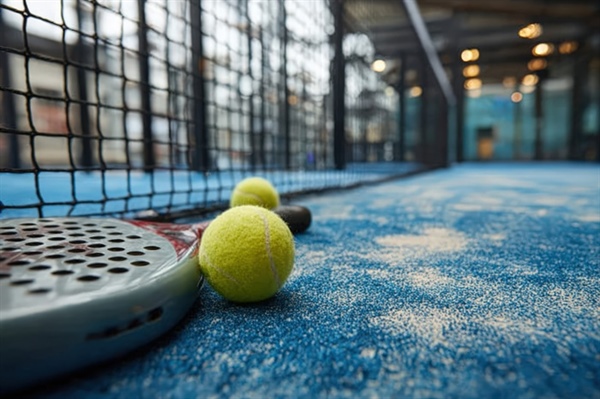
The game of padel is currently the world’s fastest-growing racket sport, expanding at a rate of over 20% annually. For Minnesota athletic club and recreational sport center owners, the opportunity to increase memberships is now. While our climate presents unique hurdles, the demand for the high-social, high-energy sport makes padel a high-yield investment.
With court rentals typically costing around $50-$100 per hour, a well-executed indoor/outdoor hybrid facility can provide a 10-month playing season and an impressive ROI.
C&C Courts, a premier sports court builder in Minnesota, has added padel courts to our lineup of expertly-built sports courts. We work with commercial customers who want to expand their sports offerings, and padel is a top choice! Let’s take a look at how you can help bring padel to your Minnesota-based club.
Step 1: Site Selection, Zoning, and the Mendota Heights Precedent
Before breaking ground on a new sports court, you have to clear regulatory hurdles. In Minnesota, commercial sports courts are rarely “permitted by right,” which means they almost always require a Conditional Use Permit (CUP).
To get a CUP, you will need a site plan, which means hiring a professional to create a plan with the standard padel court dimensions (20m x 10m / 66ft x 33ft), plus the required setbacks. In addition, you will need to consider zoning and variances. Look for commercial or recreational zones if adding to a new location. Be prepared for public hearings regarding light and noise.
You can follow the lead of a local example in Mendota Heights, where drainage plans and fencing setbacks were critical to securing city council buy-in. You should be prepared to prove your court’s runoff won’t impact neighboring properties or wetlands.
Step 2: Design Specs and Compliance
A padel court is a specialized piece of engineering involving tempered glass, steel mesh, and artificial turf. This makes it a little more complicated than a tennis court or pickleball court, but the effort will be worth your while.
The materials you will need include 10mm or 12mm tempered glass. You will need to ensure the steel frame for the glass is powder-coated to resist Minnesota’s humidity and road salt (if near a major thoroughfare). For the playing surface, you will need monofilament turf with silica sand infill, which is standard for most padel courts. Adequate lighting is particularly important when the year closes out into October and November, when the sun sets sooner. The best bet is to use directional LED lighting. To pass MN city inspections, you must demonstrate “zero light spill” over property lines, ensuring the court is bright for players but dark for neighbors.
Step 3: Minnesota Construction Tweaks (The Frost Factor)
Building in the Midwest required more than a slab of concrete. To avoid causing your court to buckle during spring freeze-thaw cycles, you’ll need to make a few construction tweaks.
Before pouring concrete, always start with a soil boring test to check for clay or peat, which can dramatically shift during the winter.
One construction tweak to consider is frost-resistant foundations, which are perfect for Midwest padel courts. Standard padel courts call for a 4-inch slab, but in MN, you will need a reinforced concrete base, which is often 6 to 8 inches. Below that, you will need a compacted gravel sub-base to handle soil expansion.
While C&C Courts recommends spring or summer installation, we can handle fall installation as well. However, if pouring concrete in late fall, insulated concrete blankets or chemical accelerants will be needed to ensure the slab reaches the necessary PSI before the deep freeze hits.
The timeline for building a padel court can last between 8 to 12 weeks, assuming you have the necessary permits in hand.
Step 4: Cost Realities vs ROI
Building a commercial padel court is a significant capital investment, but the revenue model is robust. Between site prep, specialized glass imports, and Minnesota-grade foundations, initial costs can be high. However, unlike tennis courts, you can fit three padel courts in the space of one tennis court, which triples your revenue per square foot.
As for revenue streams, beyond hourly rentals, successful Minnesota clubs have leaned into memberships, tournament fees, and pro-shop sales. With the growing “pickleball fatigue,” padel offers a premium alternative that justifies higher price points.
Step 5: Vendors, Inspections, and Launch
After the construction of your padel court, you will need to schedule a city inspection. They will check the structural integrity of the glass mountings and the electrical safety of the LED lighting towers.
Before opening your court, make sure you create a robust sports court maintenance plan to ensure your court stays in perfect shape for years to come.
The final hurdle for opening a padel court is the Certificate of Occupancy. Once you have this in hand, you can launch your padel court marketing and advertising initiatives. Consider an indoor-outdoor hybrid model–using a seasonal dome or high-clearance steel structure–to ensure your court stays profitable as long as possible.
Contact C&C Courts to Build Your Minnesota Padel Court
For over 35 years, C&C Courts has built sports courts in Minnesota, complete with expert designs and construction. We are experienced with cold-weather installations as well, which means your padel court can be ready to use as soon as the snow melts in spring. Our commercial sport court services expand to other sports as well, including pickleball, basketball, and multi-sport courts.
If you’re ready to bring new members with a love of padel to your club, contact C&C Courts today for a free quote. You can also reach us at 952-746-4545 for more information.
